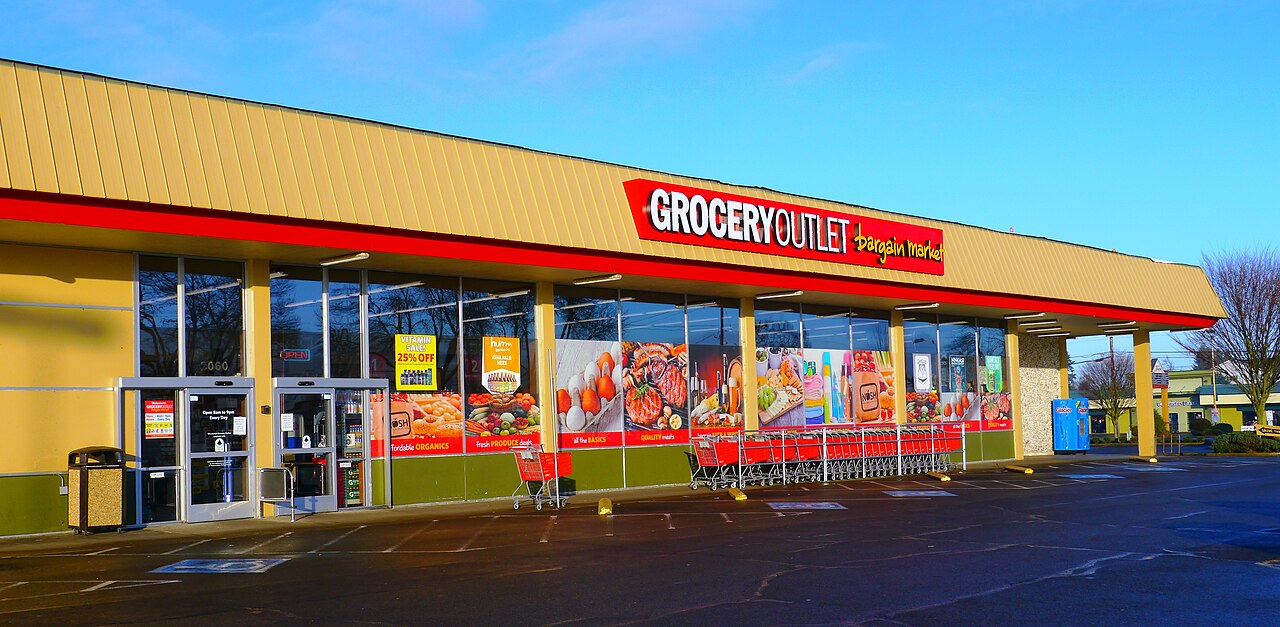
If you saw “Grocery Outlet store closures” climbing through Google Trends, the sudden interest has a clear source. A new round of reports highlighted that the discount grocer closed 12 stores during the 13 weeks that ended July 4, 2026. That figure does not describe a newly announced group of 12 stores on top of the larger closure plan. It records activity during the quarter while Grocery Outlet continued carrying out the 36-store optimization plan announced in March.
Why the headlines mention both 12 and 36 stores
Grocery Outlet’s board adopted its optimization plan on March 2, 2026 after reviewing the financial and operational performance of its store network. The company’s official annual-results release described 36 stores as financially underperforming and said the plan included closing those stores, dealing with the leases and ending the associated agreements with independent operators.
When Grocery Outlet later reported its first-quarter results, it said 28 stores had closed during that quarter, including 27 connected to the optimization plan. Recent coverage then focused on the following quarter, when the company closed 12 stores during the 13 weeks ending July 4. Nine of those were tied to the same optimization plan. The quarterly numbers therefore track when closures occurred, while the figure of 36 describes the approved restructuring program.
The numbers should not simply be added together. Doing so would create a false total and suggest that Grocery Outlet announced a second large closure wave. The more accurate conclusion is that the retailer moved quickly through a plan that had already been disclosed to investors and shoppers earlier in the year.
The reported Grocery Outlet closing locations by state
Grocery Outlet did not initially publish the individual stores in its corporate announcement. The locations became public through properties marketed for sublease by restructuring firm Gordon Brothers and through local reporting. The list below brings those reported locations together by state. An address is included where it has been consistently reported, while locations without a verified street address are listed by city to avoid attaching the wrong storefront to a closure.
California
9 locations- Azusa — 355 N. Citrus Ave.
- Brawley — 315 Panno Drive
- El Cajon — 350 N. Second St.
- Kerman — 14868 W. Whitesbridge Ave.
- La Habra — 2001 W. Whittier Blvd.
- Ontario — 4420 Ontario Mills Parkway
- Patterson — 2900 Sperry Ave.
- Poway — 13345 Poway Road
- Ridgecrest — 120 N. China Lake Blvd.
Idaho
3 locations- Idaho Falls
- Pocatello
- Smelterville
Maryland
8 locations- Catonsville
- Columbia
- Cockeysville
- Hagerstown — 1713 Massey Blvd.
- Nottingham
- Owings Mills
- Rosedale
- Westminster
New Jersey
6 locations- Delran — 4004 Route 130
- Gibbstown — 401 Harmony Road
- Hazlet
- Mays Landing — 190 Hamilton Commons Drive
- Rio Grande — 3174 Route 9, Suite 5
- Sicklerville — 677 Berlin Cross Keys Road
Ohio
6 locations- Canton
- Cincinnati
- Lorain
- Ontario
- Parma
- Austintown in the Youngstown area
Pennsylvania
4 locations- Kennett Square — 345 Scarlett Road
- Meadville — Park Avenue area
- Philadelphia — 2017 W. Oregon Ave.
- Philadelphia — 2524 Welsh Road
The six state totals add up to 36 locations. A property appearing on a sublease list supports its inclusion in the reported closure program, but shoppers should still check Grocery Outlet’s current store locator before making a special trip because closing dates and local transitions can differ.
Why Grocery Outlet decided to close the stores
The company’s explanation centers on store performance rather than a plan to leave entire states. Grocery Outlet said its review was intended to strengthen profitability, improve cash flow and concentrate resources on stores with a more viable future. Chief executive Jason Potter also told investors that the chain had expanded too quickly in some markets.
The financial background helps explain the urgency. Grocery Outlet reported a fourth-quarter operating loss of $234.8 million and a net loss of $218.2 million. Those figures included substantial non-cash impairments, so they should not be read as a simple measure of money leaving the business. They do show why management chose to reassess stores that were not expected to reach sustainable profitability.
Pressure on Grocery Outlet’s customers also mattered. The company referred to delayed federal assistance benefits, including SNAP, and more aggressive promotions from competitors. For a retailer whose appeal rests heavily on recognizable products at reduced prices, customers’ perception of value is especially important. Management said it wanted to sharpen that value proposition while improving the in-store experience.
Does this mean Grocery Outlet is going out of business?
No evidence in the company’s published results supports the claim that Grocery Outlet is shutting down nationally. The retailer ended its first fiscal quarter with 549 stores across 16 states after opening seven new stores and closing 28. Later reporting placed the chain at 547 stores after the next quarter. The precise count changes as stores open and close, but the remaining network is far larger than the group affected by the optimization plan.
The company has also continued opening stores in California. That combination can look contradictory until you consider that retailers regularly close weaker locations while investing in markets where they expect stronger demand. Grocery Outlet described the process as a correction to earlier expansion, not a withdrawal from discount grocery retailing.
What the closures mean for regular shoppers
If your local store appears on the list, begin by checking its current listing and calling the store before traveling. Some locations closed earlier in the year, while reporting around other stores used future closing dates or referred to closeout periods. Search results and map listings can remain visible after a storefront has stopped operating, which makes a direct check worthwhile.
Shoppers should also avoid assuming that another store in the same state is affected. Grocery Outlet said it was not fully exiting any state, and local coverage identified many stores that would remain open. A closing location in Ontario, California, for example, does not say anything about a similarly named city elsewhere or about every nearby Grocery Outlet.
Closeout discounts can change quickly and are controlled locally. Availability, return arrangements and the acceptance of offers or coupons may differ during a wind-down. Confirm the current terms in the store rather than relying on a social-media post from another location. Grocery Outlet’s independently operated model also means the experience can vary from one store to another.
Are more Grocery Outlet stores likely to close?
The 36-store optimization plan is the only large, specifically quantified Grocery Outlet closure program confirmed in the company materials reviewed for this update. Future openings and closings remain possible as part of normal retail operations, but it would be misleading to present every later quarterly closure count as a separate national announcement.
Anyone following this story should watch the company’s quarterly results, its official store locator and credible local reporting. A new corporate announcement would change the picture, while a recycled headline may simply be describing progress already included in the March plan. This page will be updated when verifiable new locations or a materially different company announcement becomes available.
The clearest way to understand the 2026 closures
Grocery Outlet entered 2026 with a much larger store network than it had two decades ago, then acknowledged that part of its recent growth had moved too quickly. The company responded by selecting 36 underperforming stores for closure across California, Idaho, Maryland, New Jersey, Ohio and Pennsylvania. Most of the program was carried out rapidly, which is why different quarterly reports now contain different closure totals.
For shoppers, the location list matters more than an alarming national headline. Grocery Outlet is still operating hundreds of stores, it has not announced a complete shutdown and it continues to open stores in selected markets. The real story is a targeted correction inside a large discount chain, with a very personal consequence for communities losing the individual stores they relied on.