FosPower NOAA Emergency Weather Radio
FosPower NOAA Emergency Weather Radio
A sudden power outage can change an ordinary evening in minutes. You may lose the lights while preparing dinner, discover that your phone battery is running low, or find that the television and home internet connection are no longer available. During a severe storm, a wildfire-related evacuation or a prolonged interruption to local services, being able to hear reliable information becomes just as important as having a flashlight within reach. The FosPower Model A1 Emergency Weather Radio is designed for precisely these situations, bringing radio reception, lighting and several power options together in a portable orange-and-black device.
This is not a replacement for an emergency plan or a fully stocked supply kit. Its advantage is that you can use one compact piece of equipment for several immediate needs while you decide what to do next. Keeping it in a known location, understanding its controls and testing it before bad weather arrives will make it far more useful than leaving it unopened in a cupboard.

View the FosPower emergency radio on Amazon ↗
Why a weather radio matters when the power goes out
When a storm damages local power lines, your home router will usually stop working unless it has a backup supply. Mobile networks may remain available, but service can become unreliable when many people are trying to call or use mobile data at the same time. A battery-powered radio gives you another way to listen for developments. The FosPower Model A1 offers AM and FM reception together with the NOAA weather band, allowing you to tune in to local broadcasters and US National Weather Service radio transmissions wherever those signals are available.
NOAA Weather Radio is particularly relevant in the United States because its regional transmitters broadcast weather and hazard information. However, you should not assume that this model will automatically switch on and warn you of every approaching hazard. Test the weather-band reception in your area and continue using official emergency alerts on your phone. During an evacuation, follow the instructions issued by local authorities rather than relying on an ordinary radio broadcast alone.

How to prepare the radio before an emergency
Start by charging the internal battery according to the instructions supplied with your exact unit, then tune the AM, FM and weather bands while conditions are normal. Find the strongest local NOAA station and write down useful radio frequencies on a card kept alongside the device. Check the flashlight, reading lamp and SOS control, then show other household members where the radio is stored. If an emergency occurs while you are away or unable to reach the equipment yourself, someone else in your home should still know how to operate it.
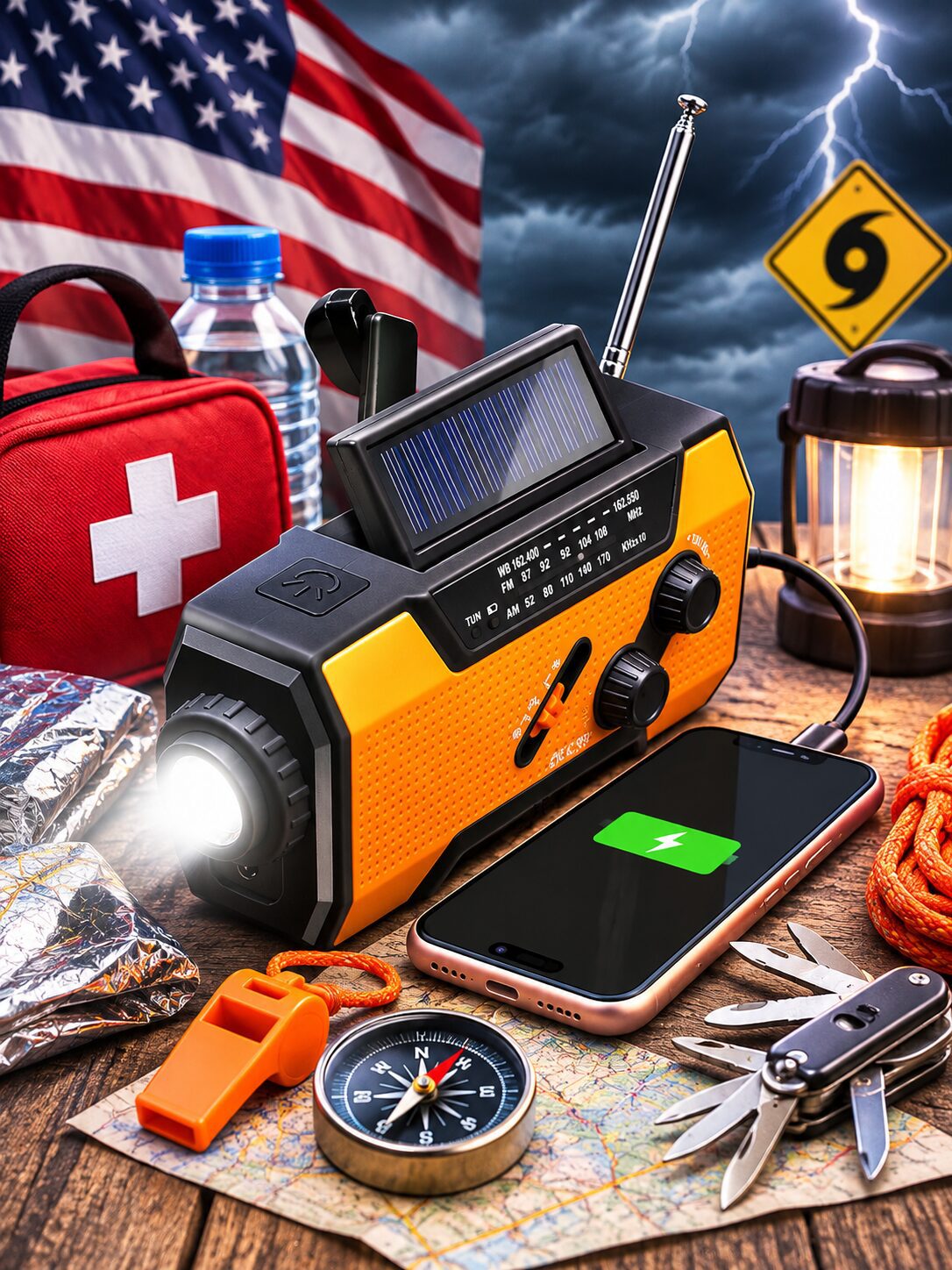
The Model A1 has an internal rechargeable 2,000mAh lithium-ion battery, supports AAA batteries as a separate supply, and offers solar and hand-crank charging. FosPower describes four power sources when the internal battery is counted separately. Spare AAA batteries are not included, so add a fresh set to your household emergency kit and keep them stored appropriately. Connection types and included charging cables can differ by production version, which makes checking the port on your actual unit more reliable than assuming every online photo shows the same connector.

Using the hand crank and solar panel realistically
A hand crank is useful when conventional charging is unavailable, but it takes effort to generate a relatively small amount of electricity. Think of it as a way to extend access to essential radio broadcasts or brief lighting rather than a method of rapidly filling a smartphone battery. The small solar panel can also provide supplementary charging in suitable sunlight, but charging depends on light intensity and takes considerably longer than ordinary USB charging. Whenever electricity is available, fully charge the device in advance rather than leaving all charging until the outage has begun.
You can improve your preparation by keeping a separate, higher-capacity power bank charged for your phone. Store compatible charging cables beside the radio and consider a second independent light source in case the radio is damaged or misplaced. The aim is to avoid depending on one device for every essential function, especially during a long outage when you may need to conserve the limited energy available.
Emergency phone charging when you need to communicate
The built-in power bank has a nominal capacity of 7,400mWh, equivalent to 2,000mAh at its internal battery voltage. That is useful as a limited emergency reserve, but it is substantially smaller than the batteries found in many modern smartphones and some power will be lost during conversion. Do not count on receiving a full phone recharge. Instead, save the available power for a short important call, a message to family or accessing emergency instructions when other charging options have failed.
During a power outage, lower your phone screen brightness, switch off unnecessary background activity and avoid streaming video or repeatedly checking social media. If official messages instruct you to evacuate, charge your phone whenever possible before leaving, take the charging cable with you and use text messages when voice networks are congested. Keep written contact numbers as an additional backup because a digital address book is not always accessible when the battery is empty.

See the radio and emergency charging features on Amazon ↗
Two light sources for navigating safely in the dark
FosPower equips the Model A1 with a 1W LED flashlight and a separate four-LED reading lamp. The flashlight is helpful when you need to locate a doorway, inspect supplies or move through a dark hallway. The wider reading light is more comfortable when you are checking printed instructions, reviewing medication labels or writing down information from a radio announcement. Although both lights are convenient, keep spare flashlights and batteries available so the whole household does not have to share one radio.
Place the radio on a stable surface, away from the edge of a table where it could fall, and keep its beam directed toward the floor when walking through an unfamiliar space. During a storm, avoid walking into damaged areas or approaching fallen electrical cables, even if your flashlight makes them visible. Where there is a risk of gas leakage, follow emergency responders’ directions about electrical devices and leave the area if instructed.

What the SOS alarm can and cannot do
An integrated SOS alarm and flashing light can help attract attention when you need assistance, particularly in a location where another person may be within hearing or visual range. The radio is not a two-way emergency communication device, however, and activating the SOS alarm does not contact police, fire services or a rescue dispatcher. Call 911 in the United States when you need immediate emergency assistance and a connection is available. Use the alarm only when appropriate, taking care not to expose your ears or those of others to its loud sound at close range.
Discuss this distinction with children before letting them handle the device. Show them the difference between the flashlight, radio controls and SOS switch, and explain that the radio does not replace contacting a trusted adult or emergency services. A little familiarity can reduce confusion if a storm causes the lights to go out unexpectedly.

Preparing for hurricanes, winter storms and wildfires
In hurricane-prone areas, prepare well before a warning becomes urgent. Secure outdoor items, identify your evacuation zone, keep fuel in your vehicle when practical and monitor the official forecast. Set aside drinking water, shelf-stable food, prescription medication, personal identification and supplies for children or pets. Put the FosPower radio near your emergency bag and test the local weather frequency. If authorities order an evacuation, leave according to their instructions rather than waiting for conditions to deteriorate.
Winter storms create different problems. Roads may become impassable, the home can lose heat and batteries may perform poorly in very cold conditions. Store the radio indoors at a suitable temperature, keep blankets and warm clothing accessible, and understand how you will maintain safe shelter if heating fails. Never operate a generator, grill or other fuel-burning device indoors or in an attached garage because carbon monoxide can become deadly without any visible warning.
Wildfire preparedness requires particular attention to evacuation routes and rapidly changing local information. Keep an overnight bag near the exit, plan for pets and have paper copies of important information. The radio may provide additional broadcasts, but wildfire boundaries and evacuation orders should always be checked against official local sources whenever possible. Do not depend on the weather band alone for detailed, street-level evacuation information.
Build a household emergency kit around the radio
A useful emergency kit should support your household for several days and reflect the people who actually live in your home. Alongside the radio, include drinking water, ready-to-eat food, a manual can opener when needed, a first aid kit, personal medication, hygiene products, spare batteries, charging cables and important documents protected from moisture. For infants, consider formula and diapers; for pets, pack food, a leash, medication and veterinary information. Include cash in small denominations because electronic payments may be unavailable during a prolonged outage.
FEMA recommends putting together emergency supplies and making a household communication plan. Decide where everyone will meet if you cannot return home, choose an out-of-area contact and write down relevant phone numbers. If a family member uses powered medical equipment, arrange a specific backup power and evacuation plan with the healthcare provider or equipment supplier. The small radio power bank should never be treated as a dependable source for life-sustaining equipment.
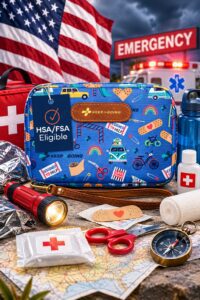
For smaller everyday injuries, a separate travel first aid kit is a sensible companion to the emergency radio. You can read more in the Pink Dramatic guide to the KEEP>GOING travel first aid kit for kids, which explains the importance of keeping practical medical supplies ready when you are travelling with children.
Make a practical emergency plan for your family
Try turning preparation into a short household exercise rather than discussing it only when bad weather is approaching. One evening, switch off the room lights and ask everyone to locate the flashlight, radio, spare batteries and emergency contact list. Practise finding the chosen radio station and decide which items must be carried if you need to leave within minutes. This small rehearsal can reveal details you may otherwise overlook, such as a missing charging cable, an empty battery or a bag stored behind heavy boxes.
Review your plan when seasons change, after moving house or when the needs of your household change. Keep emergency information in an accessible place and check that everyone knows the location. It may also help to prepare a smaller kit for your car or workplace, taking local weather and storage temperatures into consideration. If you travel away from home, remember that NOAA frequencies and reception differ by region, so the station programmed for your home may not be the right one elsewhere.
Water resistance, size and everyday care
The FosPower Model A1 measures approximately 6.2 × 2.9 × 2.1 inches and weighs about 10.9 ounces. Its IPX3 rating indicates resistance to spraying water under specified test conditions; it does not mean the radio is waterproof or safe to immerse. Keep it protected inside a dry bag during heavy rain or flooding, and dry the outside carefully if it becomes damp. Do not place it in floodwater or expose electrical connectors unnecessarily to moisture.
Inspect the device periodically for battery damage, cracked housing or problems with the crank and charging port. Follow the manufacturer’s directions for storage, charging and battery replacement. A compact emergency radio is most useful when it is charged, dry, accessible and already familiar to the people who may need it.

Who may find the FosPower emergency radio useful?
This radio is relevant to households preparing for seasonal storms, people building an evacuation bag, students putting together a basic apartment emergency kit, and campers who want an additional information source away from reliable electricity. Its combination of broadcasts, light and emergency charging makes it a practical component of a broader preparedness system. The strongest reason to keep one is not that every outage becomes dangerous, but that familiar tools can help you make informed decisions when normal services are temporarily unavailable.
If you are putting together your first emergency supply kit, start with the essentials you would need during the first days of an interruption, then decide where the radio fits within that plan. Check that your chosen model matches your charging cables and the weather services in your area, practise using it and follow official guidance during a real incident. Preparing carefully gives you a clearer understanding of your options if the unexpected happens.
Shop the FosPower Model A1 emergency radio on Amazon ↗
Affiliate disclosure: As an Amazon Associate, Pink Dramatic may earn from qualifying purchases. Product features may vary by model revision. Always follow official emergency instructions and consult the included user manual.