KEEPGOING Travel First Aid GoKit for Kids
KEEPGOING Travel First Aid GoKit for Kids
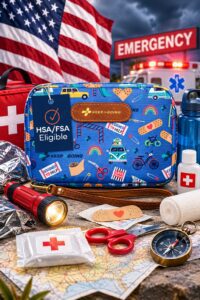
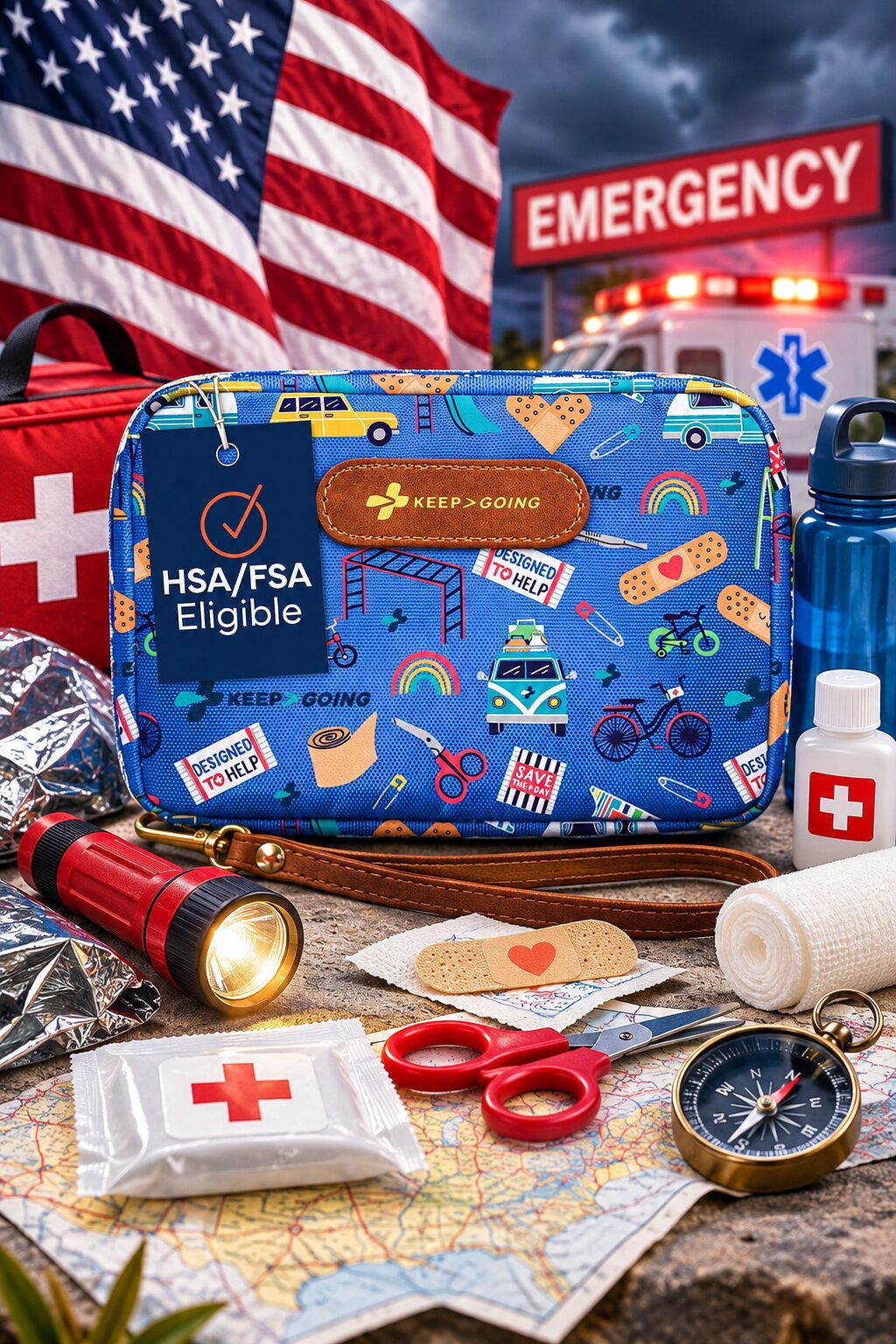
A compact first aid kit becomes especially useful when you leave the house with children, pack for a weekend away, or spend a full afternoon outdoors. The KEEPGOING Travel First Aid GoKit, 130 pieces, is designed to keep everyday first aid supplies together in one organized pouch. Rather than searching through different pockets for a plaster or gauze pad, you can open the kit and find clearly separated sections for the supplies you need. Its blue Signature design features cheerful illustrations, but the practical advantage is the selection of dressings, cleansing supplies and small tools packed inside.
This family-oriented kit is intended for everyday minor injuries, including superficial cuts, scrapes, blisters and small skin irritations. It is useful to keep close at hand during a road trip, family holiday, school outing or playground visit. The pouch is compact enough for a backpack or diaper bag and comes with a wrist strap, making it easy to move between bags as your plans change. It does not replace medical attention or a complete emergency kit for serious injuries, so knowing its limits is just as important as knowing its contents.

View the KeepGoing first aid kit on Amazon ↗
What is actually inside the 130-piece first aid kit?
The official KEEP>GOING contents diagram shows a variety of flexible adhesive bandages, including standard matching-pattern strips, smaller children’s strips, extra-large bandages, waterproof dressings, knuckle bandages, fingertip bandages and butterfly closures. That range matters because a cut on a finger requires a different shape of dressing from a scrape on a knee. The kit also includes two sterile gauze pads, a roll of medical tape, moleskin for friction-prone areas, and four non-stinging cleansing wipes. These are the practical supplies you are most likely to reach for when a small accident interrupts an otherwise ordinary day.
Alongside the dressings, the contents illustration identifies triple-antibiotic ointment packets, hydrocortisone cream, first aid burn cream, sting-relief wipes, alcohol preparation pads and lip balm. The tools include scissors, metal tweezers, cotton-tip applicators, a finger splint, tick removers, splinter-removal tools, a disposable temperature strip, safety pins, a miniature sewing kit and two nosebleed plugs. There is also a compressed towel, small bags, a wrist strap, a first aid guide and children’s stickers. These are examples of the supplied items rather than a substitute for reading the individual labels, and the exact contents should always be checked against the pack you receive.

How to use the bandages and gauze for minor cuts
Suppose your child trips while playing and gets a small scrape on their knee. First, make sure the injury is minor and that there is no heavy bleeding, deep cut or embedded object. Wash your hands if possible, gently rinse the area with clean running water and remove surface dirt without digging into the wound. Once the skin is clean, use a suitable sterile dressing or a bandage large enough to cover the affected area. The XL bandages are useful when a standard strip would not cover the scrape, while the smaller patterned plasters can suit little superficial cuts. Replace the dressing if it becomes wet, dirty or loose.
Sterile gauze pads are helpful when a standard adhesive bandage is not the most suitable size. For a minor bleeding wound, apply gentle, continuous direct pressure with clean gauze until the bleeding stops. Medical tape can help secure a dressing when appropriate. If bleeding is heavy, does not stop with firm pressure, or the wound is deep, gaping or caused by an animal bite, seek professional medical care promptly. The kit makes basic supplies accessible, but it cannot tell you whether an injury requires stitches or other treatment.
Blisters, scraped heels and long walking days
When you are travelling, blisters can develop from shoes that rub in the same place for hours. This is where the moleskin and selected bandage shapes become practical additions to the GoKit. Apply a protective pad to intact skin around a friction point according to its instructions, avoiding extra pressure over a blister. If a blister has formed, keeping the area clean and protected can reduce further rubbing. Avoid deliberately popping an intact blister. Anyone with diabetes, poor circulation, impaired sensation or signs of infection should obtain appropriate medical advice rather than relying on a travel dressing alone.
It is worth checking your walking shoes before a holiday and placing the first aid pouch in an easily accessible compartment of your daypack. That way, a blister does not force you to unpack your entire suitcase to find a piece of protective material. You can also add your preferred blister dressings if you regularly experience friction from hiking boots or new shoes.

What to do with the sting relief, tick removers and tweezers
Outdoor activities bring occasional insect bites, splinters and ticks. The included tweezers are useful for removing a small, visible splinter close to the surface of the skin, provided it can be grasped without extensive digging. Tick-removal tools are intended to help remove attached ticks; follow the tool instructions and local public-health guidance, and check the skin afterward. If you develop a spreading rash, fever or other symptoms following a tick bite, arrange medical assessment. A tick-removal tool is not a substitute for medical evaluation when symptoms arise.
Sting-relief wipes and hydrocortisone cream may help with selected mild skin irritations when used according to their labels. Check the person’s age, product warnings, allergies and suitability before applying any medicated product. A child who develops breathing difficulty, facial or throat swelling, faintness or widespread symptoms after a sting needs emergency medical assistance immediately. The first aid kit may help with a minor local reaction, but it is not a treatment for anaphylaxis.
How the burn supplies should be used
The burn-related products are intended for limited, minor situations, and they should never delay appropriate first aid. If you touch a hot surface or spill a hot drink on your skin, cool the burn promptly under cool running water for 20 minutes, remove nearby jewelry if it is not stuck, and do not apply ice. Cover loosely afterward with an appropriate non-adherent dressing. Do not apply burn cream, oils or adhesive plasters to a fresh burn before cooling it. Seek urgent medical advice for extensive burns, burns affecting the face or hands, chemical or electrical burns, or burns involving children when there is uncertainty about severity.
The included burn cream may have a role only when its specific label allows it and a healthcare professional or local guidance considers it appropriate. This distinction matters because owning a burn product does not mean that applying it is always the correct first step. The most useful part of carrying an organized kit is having a dressing ready once the right initial care has been given.
Nosebleeds and other unexpected situations on the go
The GoKit includes nosebleed plugs, which may be convenient to have on hand, but standard first aid is the starting point for most ordinary nosebleeds. Sit upright, lean slightly forward and pinch the soft part of the nose continuously for about 10 to 15 minutes while breathing through the mouth. Avoid tilting the head backward. Use any enclosed nasal product only as instructed and never push it deeply into the nose. Seek medical advice if bleeding is heavy, follows significant injury or persists despite appropriate pressure, and obtain emergency help if the person feels faint or has trouble breathing.
A disposable temperature strip, scissors and small safety pins are useful examples of the miscellaneous tools that often get forgotten when families assemble their own travel supplies. The temperature strip gives an approximate screening indication and is not a replacement for a reliable medical thermometer when accurate measurement is important. Scissors can help cut tape and some dressings, while the first aid guide gives you a reference point for situations you do not encounter frequently.

Practical ways to organize the kit for your family
Before your first outing, open the GoKit at home and look through each labeled compartment. Learn where the gauze, dressings and tools are stored so you can find them without searching when someone needs help. If you regularly travel with small children, consider placing the kit in the same compartment of your diaper bag every time. For school holidays, you could keep it beside other day-trip essentials and move it into your backpack before leaving the house. Its water-resistant material helps protect the contents against everyday splashes, although the pouch should not be treated as fully waterproof.
You can make the kit more useful by tailoring the remaining space to your family. For example, add emergency contact information, a card listing important allergies, and any prescribed rescue medication in its properly labeled packaging if it fits safely. KEEP>GOING says the pouch has space for a slim epinephrine auto-injector or an inhaler, but you must check the actual fit and access requirements of your specific medication. Prescription medication is not included as part of the 130-piece kit. If someone depends on an inhaler or auto-injector, make sure that everyone responsible knows where it is and has been instructed in its use.
When this compact first aid kit is particularly handy
During a family road trip, minor scratches and blisters may occur at rest stops, playgrounds or picnic areas. An organized first aid pouch means you can quickly locate a dressing and return to your plans once the situation has been assessed and safely handled. For holidays, it can travel in your carry-on bag as a convenient source of basic supplies. The manufacturer describes it as TSA-friendly, but security officers make the final decision about carried items, especially scissors, liquids and medications. Check the latest airline and airport rules before departure.
The kit can also be a practical addition to a day hiking bag or a sports bag, provided you understand that a 130-piece household GoKit is not a substitute for specialist wilderness or trauma supplies. If you spend time in remote areas, consider extra equipment and first aid training appropriate to the route, weather and travel distance. At home, a dedicated pouch can help avoid the common problem of having plasters in one drawer, gauze in another and no clear idea where the tweezers have gone.
How to keep the first aid supplies ready for use
A first aid kit is only dependable when its contents are complete and in good condition. Set a reminder every few months to check that packaging is sealed, dressings are clean, and creams or ointments have not passed their expiration dates. Replace items you use after a trip, keep the pouch dry and store it away from excessive heat, particularly if it contains medicated packets. This is important if the kit lives in a car, where interior temperatures can become very high. The refillable construction makes it straightforward to maintain the same familiar arrangement rather than rebuilding your supplies from scratch.
If you are preparing a gift for new parents, a frequent traveler or a student heading away from home, a compact first aid kit can be a thoughtful practical choice. Explain where the supplies are stored and encourage the recipient to review the contents before an emergency occurs. Its value comes from being organized and easy to carry, not from claiming to handle every possible injury.
Explore travel bags and practical accessories on Pink Dramatic
If you enjoy planning trips and keeping essential belongings organized, take a look at the backpacks and school bags collection on Pink Dramatic. Choosing a travel bag with an accessible compartment makes it easier to keep your basic first aid supplies within reach, alongside the everyday items you already bring when you leave home.
The KEEP>GOING 130-piece First Aid GoKit offers a practical starting point for caring for everyday minor injuries while travelling, spending time outdoors or moving between family activities. Its categorized supplies make it easier to find the appropriate item, and the compact format encourages you to bring it rather than leave it in a cupboard. Before buying, check the selected color and contents on the Amazon product page, as available patterns and product variations may differ.
Shop the 130-piece KEEP GOING First Aid Kit on Amazon ↗
Affiliate disclosure: As an Amazon Associate, Pink Dramatic may earn from qualifying purchases. First aid information is general and does not replace professional medical advice, emergency services or the instructions supplied with each product.